Strength
How to Start Strength Training: A Beginner's Guide
The movements to learn first, how heavy to lift, how often to train and a simple starter plan you can follow from week one.
Free · No obligationReply in 1 working day
Get your free quote
Tell us your goal and we'll recommend the right coaching option and price for you.
Key takeaways
- Build your training around five fundamental movement patterns: squat, hinge, push, pull and carry.
- Start lighter than you think, finish each set with two or three good reps "in the tank" and add load gradually.
- Two or three full-body sessions a week is plenty for most beginners.
- Consistency and good technique matter far more than the perfect programme.
Why strength training matters for everyone
Strength training isn't just for bodybuilders or powerlifters. Lifting weights — or doing any form of resistance training — is one of the most valuable things you can do for your health. The NHS physical activity guidelines recommend that adults do activities that strengthen the major muscle groups on at least two days a week, alongside regular aerobic activity.
The benefits go well beyond looking toned. Regular strength training helps you build and maintain muscle, supports bone health, makes everyday tasks easier and can help with body composition when combined with sensible nutrition. Many people also find it does wonders for their confidence and mood.
The good news? Beginners progress quickly. In the first few months, you'll often see your strength climb week after week as your body learns the movements and adapts. All you need is a sensible plan and a little patience.
The five movements every beginner should learn
Rather than memorising dozens of exercises, focus on mastering five basic movement patterns. Almost every effective strength programme is built on them.
1. Squat
Bending at the hips and knees to lower your body, then standing back up. Start with a bodyweight squat to a box or bench, then progress to a goblet squat holding a dumbbell or kettlebell at your chest. Keep your whole foot on the floor and your chest proud.
2. Hinge
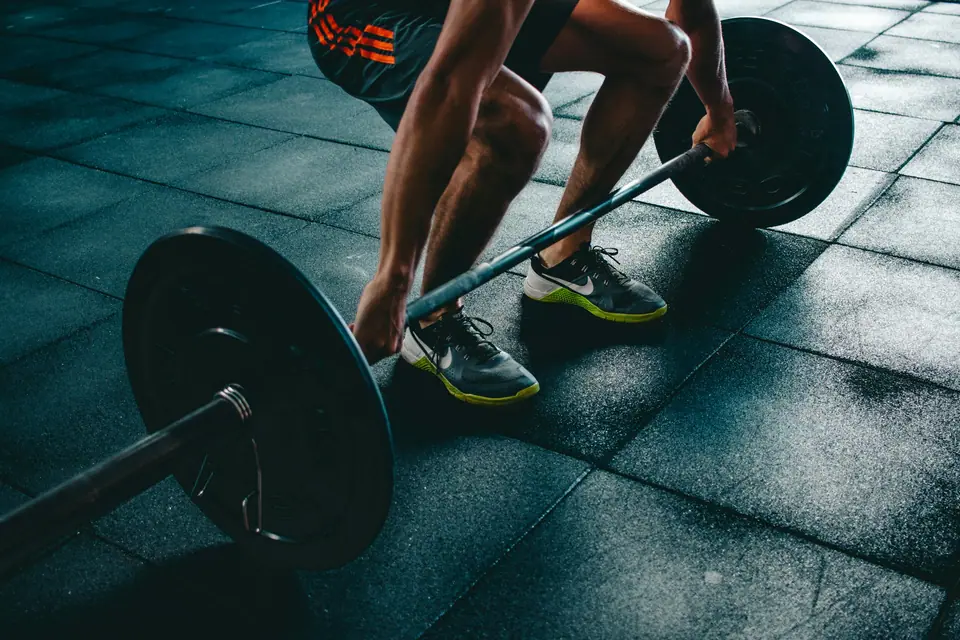
Pushing your hips back while keeping a long, neutral spine — the pattern behind the deadlift. Learn it with a Romanian deadlift using dumbbells or a kettlebell deadlift from a raised position. Think "hips back", not "bend down".
3. Push
Pressing weight away from your body. Good options include incline press-ups (hands on a bench), dumbbell bench press and dumbbell overhead press. Keep your ribs down and your shoulders away from your ears.
4. Pull
Pulling weight towards your body — vital for posture and balanced shoulders. Try seated cable rows, single-arm dumbbell rows and lat pulldowns. Lead with your elbows and squeeze your shoulder blades together.
5. Carry
Simply picking up something heavy and walking with it. Farmer's carries with a dumbbell in each hand build grip, core strength and posture with very little technique to learn. Stand tall and walk slowly with control.
How heavy should you lift as a beginner?
This is the question we hear most. The simplest answer is: heavy enough to be challenging, light enough to keep perfect form.
A useful tool is reps in reserve (RIR) — how many more good-quality reps you could have done at the end of a set. For beginners, aim to finish most sets with around two to three reps in reserve. Some coaches express this as an RPE (rate of perceived exertion) of roughly 7–8 out of 10.
If your form breaks down before the end of a set, the weight is too heavy. If you could easily do another five or more reps, it's too light. Adjust next set and make a note for next time.
In your first couple of weeks, err on the lighter side. You're learning a skill, and your muscles will feel the effects more than you expect. It's far better to finish a session feeling you could have done more than to be too sore to come back.
Progressive overload: the key to getting stronger
Your body adapts to the demands you place on it. To keep improving, those demands need to increase gradually over time — this is called progressive overload. You can progress by:
- Adding a small amount of weight (for example 1–2.5kg on dumbbell or barbell exercises)
- Doing one or two more reps with the same weight
- Adding an extra set
- Improving control and range of motion
A simple, beginner-friendly method is double progression. Pick a rep range — say 8–12. Start with a weight you can lift for 8 good reps on every set. Each session, try to add a rep or two. When you can do 12 reps on all sets with good form, increase the weight slightly and start again at 8.
Keep a training log, whether that's a notebook or an app. Recording your weights and reps is the easiest way to make sure you're actually progressing rather than repeating the same session indefinitely.
How to warm up properly
A good warm-up takes 5–10 minutes and prepares your body for the work ahead. Especially on cold Tyneside mornings, it's not something to skip.
- Raise your temperature: 3–5 minutes on a bike, rower or brisk walk.
- Mobilise: a few controlled movements such as leg swings, hip circles, cat-camels and arm circles.
- Ramp up: before your first main exercise, do one or two lighter sets, gradually building towards your working weight.
Want to learn the basics with expert coaching?
Our Beginner Fitness Programme teaches you these movements step by step, in a supportive setting, so you can train with confidence from day one.
Book a Free ConsultationA simple beginner strength plan
Here's a straightforward full-body plan you can follow two or three times a week, with at least one rest day between sessions. Alternate between Workout A and Workout B.
| Workout A | Sets × reps | Workout B | Sets × reps |
|---|---|---|---|
| Goblet squat | 3 × 8–12 | Dumbbell Romanian deadlift | 3 × 8–12 |
| Dumbbell bench press | 3 × 8–12 | Dumbbell overhead press | 3 × 8–12 |
| Seated cable row | 3 × 10–12 | Lat pulldown | 3 × 10–12 |
| Glute bridge | 2 × 10–15 | Reverse lunge (or split squat) | 2 × 8–10 each leg |
| Farmer's carry | 3 × 20–30m | Plank | 3 × 20–40 sec |
Rest around 60–120 seconds between sets. Each session should take about 45–60 minutes including your warm-up. Follow this plan for 8–12 weeks, applying double progression, and you'll have built a solid foundation.
On your non-lifting days, staying active helps your recovery and overall health. A brisk walk along the Quayside or around the Town Moor counts.
Common beginner mistakes (and how to avoid them)
- Doing too much, too soon. More isn't always better. Start with two or three sessions a week and build from there.
- Programme-hopping. Switching routines every week means you never progress on anything. Stick with one plan for at least two months.
- Ego lifting. Adding weight at the expense of technique slows progress and increases the risk of injury.
- Skipping the "boring" exercises. Rows, carries and single-leg work build balance and resilience.
- Ignoring recovery. Muscles grow and adapt between sessions. Prioritise sleep, eat enough protein and take rest days seriously.
- Not tracking anything. If you don't write it down, you can't progress it reliably.
Nutrition also plays a role. If your goal is to build muscle, you'll need enough protein and energy to support it — see our Muscle Building Programme for how training and nutrition fit together. If fat loss is your goal, read our weight loss training and nutrition guide.
Staying safe as a beginner
Strength training is very safe when it's done with sensible loads and good technique. To keep it that way:
- If you have a medical condition, are pregnant, have a history of heart problems or are returning from injury, speak to your GP or a qualified health professional before starting a new exercise programme.
- Muscle soreness a day or two after training is normal. Sharp pain, joint pain or pain that persists is not — stop that exercise and get it checked.
- Learn how to use equipment safely, including safety pins and collars on barbells.
- Ask for help. A qualified coach can check your technique and set you up with the right starting weights.
If you'd feel more comfortable learning with support, personal training in Newcastle is a great way to build confidence quickly. And if you're wondering whether you need a coach at all, our comparison of personal training vs training alone will help you decide.
Frequently asked questions
How often should a beginner do strength training?
Two or three full-body sessions a week is ideal for most beginners. That's enough to make steady progress while allowing plenty of recovery between sessions.
Should beginners use free weights or machines?
Both have a place. Machines are great for learning a movement with more stability, while free weights like dumbbells and kettlebells build coordination and work stabilising muscles. Most beginner programmes use a mix of both.
Will lifting weights make me bulky?
Building a lot of muscle takes years of dedicated training and eating to support it, so it doesn't happen by accident. For most people, strength training creates a stronger, more athletic and more defined physique.
How long before I see results from strength training?
Most beginners notice strength improvements within the first few weeks. Visible changes in muscle and body shape usually take a few months of consistent training and good nutrition.